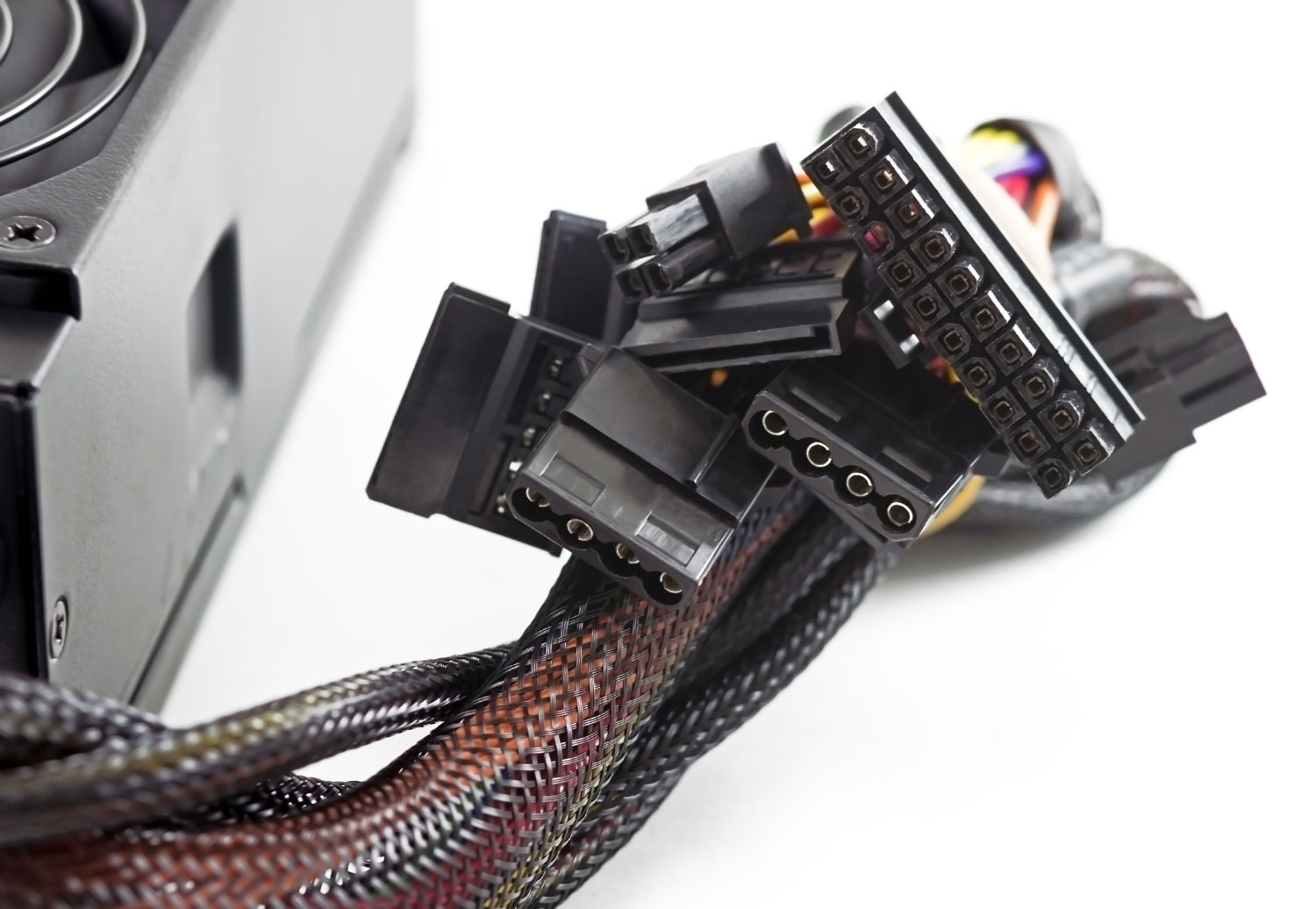
Choosing the right industrial power supply depends on your application, current and voltage requirements, cooling method, and process type. For electroplating, anodizing, e-coat, and related surface finishing processes, switch mode rectifiers available in DC, pulse, and AC configurations deliver the best combination of efficiency, precision, and long-term reliability.
Selecting the wrong power supply for an industrial application is a costly mistake. Inconsistent current delivery leads to defective plating finishes, failed anodizing layers, and unnecessary downtime. For operations where quality and uptime are non-negotiable, the power supply is not a secondary consideration—it is the foundation of the entire process.
This guide breaks down everything you need to know about industrial power supplies: how they work, which types are best suited for different applications, what technical specifications to evaluate, and how to keep them performing at their best. Whether you are outfitting a new production line or upgrading aging equipment, this resource will help you make a confident, informed decision.
American CRS Equipment has been supplying and servicing industrial rectifiers since 1998, working with operations across electroplating, anodizing, e-coat, electroforming, and semiconductor manufacturing. The technical insights in this guide draw directly from that experience.
What Is an Industrial Power Supply, and How Does It Work?
An industrial power supply converts AC power from the electrical grid into stable, controlled DC (or pulsed) output that electrochemical processes require. In surface finishing applications, this controlled current drives the deposition of metal ions onto a substrate, the formation of oxide layers, or the recovery of metals from solution.
The core of a modern switch mode power supply is a high-frequency switching circuit. Unlike older transformer-based rectifiers, switch mode technology converts power at high frequencies typically tens of thousands of hertz resulting in a much smaller, lighter, and more energy-efficient unit. The output is cleaner, more stable, and more responsive to process demands.
Three main variables define how a power supply performs in any application:
- Output current and voltage: These must match the requirements of your specific process and bath chemistry.
- Regulation quality: How precisely the unit maintains set current and voltage under varying load conditions.
- Ripple: Residual AC fluctuation in the DC output, measured as a percentage. Lower ripple equals better deposit quality.
For most electroplating and anodizing operations, tight regulation and low ripple are critical. A power supply that drifts under load will produce inconsistent results and in high-precision applications like semiconductor plating or printed circuit board manufacturing, even minor instability is unacceptable.
What Are the Main Types of Industrial Rectifiers?
Not every process needs the same type of power. Understanding the differences between rectifier types helps you match the equipment to the application.
DC Rectifiers
DC rectifiers deliver steady, continuous direct current. They are the standard choice for general electroplating, anodizing, electroforming, and electrowinning applications. The output is smooth, adjustable, and well-suited to processes that require a constant current density over time.
The American CRS Equipment DC product line includes several configurations to match different production scales and facility layouts, from compact desktop units to high-capacity tower systems.
| Rectifier Series | Max Output | Best For | Cooling |
| Sirius S075 | Up to 75 kW | Smaller plating and anodizing lines | Air-cooled |
| Quasar Q100 | Up to 100 kW | Mid-size galvanic applications | Air or water |
| Quasar Q150 | Up to 150 kW | Versatile production environments | Air or water |
| Quasar Q300 | Up to 300 kW | Larger production line applications | Air-cooled |
| Quasar Q500B | Up to 500 kW | High-demand production lines | Air or water |
| Vega V700 | High capacity | Heavy industrial continuous-duty | Water-cooled |
| Vega V810/V820 | Up to 360 kW | Large-scale, multi-industry operations | Air or water |
Pulse Plating Rectifiers
A pulse plating rectifier delivers current in controlled on/off cycles rather than continuous DC. This approach improves deposit uniformity, grain structure, and surface brightness particularly useful in applications where coating quality and adhesion are paramount.
Pulse plating is widely used in precious metal plating, PCB manufacturing, and high-spec automotive and aerospace finishing. The ability to control pulse frequency, duty cycle, and amplitude gives operators a much finer degree of control over deposit characteristics than standard DC alone.
AC Power Supplies
AC power supplies are used in specific niche applications, including certain types of electrolysis salt splitting and chemical production processes. While less common in mainstream surface finishing, they are essential for operations that require alternating polarity cycles.
Electrocoat and E-Coat Rectifiers
E-coat is an electrodeposition paint process that applies a uniform protective coating to metal parts through an electrically charged bath. The power supply for e-coat applications must deliver very stable, low-ripple DC output across a wide range of operating conditions. Voltage uniformity is especially important, since the paint film itself acts as an insulator as it builds up, requiring the rectifier to respond dynamically to changing resistance.
How Do You Choose the Right Industrial Power Supply for Your Application?
The right rectifier depends on a combination of process requirements, facility constraints, and operational goals. The following decision framework covers the most important factors.
Step 1: Define Your Output Requirements
Start with the current and voltage your process demands. These values are typically determined by:
- Bath chemistry and tank geometry
- Surface area of parts being processed
- Required current density (amps per square foot or square decimeter)
- Process temperature and solution conductivity
For electroplating applications, your chemistry supplier or process engineer can provide target current density values. Multiply that figure by your total cathode surface area to calculate the minimum output current your rectifier must deliver. Always specify equipment with some overhead—running a rectifier at its absolute maximum rating shortens its service life.
Step 2: Choose Between Air-Cooled and Water-Cooled
Cooling method has a direct impact on efficiency, maintenance requirements, and physical footprint.
| Air-Cooled | Water-Cooled | |
| Best for | Smaller to mid-size output applications | High-power, continuous-duty production lines |
| Maintenance | Clean filters regularly; simpler setup | Requires cooling water supply and flow monitoring |
| Efficiency | Good | Excellent at high loads |
| Size/Weight | Larger for same output | More compact for equivalent power |
| Upfront cost | Lower | Higher, but offsets at scale |
The Vega Series from American CRS Equipment includes a built-in water-cooled heat exchanger with a direct water connection, eliminating the need for an external cooling circuit. At outputs up to 360 kW, water cooling is not optional; it is essential for sustained performance.
Step 3: Evaluate Regulation and Ripple Specifications
For most plating and anodizing processes, you want:
- Constant Current regulation: Output current variation of less than 0.1% for a 100% load change
- Constant Voltage regulation: Output voltage variation of less than 0.1% for a 100% load change
- Ripple: Typically less than 1–2% maximum with resistive load at rated power
- Stability: Maximum output deviation of 0.05% over an 8-hour period under stable line, load, and temperature conditions
These figures are not aspirational; they reflect the actual published specifications of American CRS Equipment’s DC power supply product line. When evaluating competing equipment, ask for the same data points and compare directly.
Step 4: Consider Mounting Format and Footprint
The Quasar Series is available in rack-mount, wall-mount, desktop, and vertical desktop configurations. This flexibility makes it straightforward to integrate into existing facilities without redesigning the production layout. Larger operations requiring higher output power can scale up using multiple modules within the modular tower architecture.
Front-access serviceability is a practical detail that matters over time. When technicians can reach all components, power modules, CPU modules, heat exchanger from the front of the unit, scheduled maintenance and emergency repairs take less time and cause less disruption. The Vega Series was specifically designed with this in mind.
Step 5: Determine Control and Automation Needs
Modern rectifiers offer a range of control options:
- Manual control: Operator sets current and voltage directly at the panel
- Automatic control: The unit maintains setpoints without manual adjustment
- Programmable ramp control: Gradually increases current at the start of a cycle to reduce stress on parts and bath chemistry
- Amp-hour counter: Tracks total charge delivered, useful for process control and quality documentation
- Remote automation: Supports integration with PLC systems and production management software
For high-volume operations, automation reduces operator error and improves process consistency. If you are running printed circuit board plating or electroforming at tight tolerances, programmable control is not a luxury—it is a necessity.
What Industries Use Industrial Power Supplies?
Switch mode rectifiers and industrial power supplies serve a wide range of industries. Some of the most common applications include:
- Electroplating: Decorative and functional metal deposition on automotive, aerospace, consumer electronics, and hardware components
- Anodizing: Surface treatment of aluminum for aerospace, architectural, and consumer goods applications
- E-coat / Electrocoat: Corrosion protection for automotive body panels, farm equipment, and industrial components
- Electrowinning: Metal recovery in mining and recycling operations
- Electroforming: High-precision metal part fabrication for medical devices, optical components, and aerospace tooling
- Printed Circuit Board manufacturing: Copper plating of PCB traces and vias
- Electrolysis salt splitting: Chemical recovery and wastewater treatment in industrial processes
- Semiconductor manufacturing: Wafer-level plating and surface preparation requiring sub-milliamp precision
Each of these processes has different power requirements. The ability to configure a rectifier to match specific output ranges, cooling methods, and control modes is one reason why the modular architecture used by American CRS Equipment has become a preferred solution across so many industries.
Why Rectifier Maintenance and Training Matter
A rectifier that operates without a structured maintenance plan will eventually fail at the worst possible moment. Preventive maintenance is not about over-servicing equipment—it is about catching small problems before they become production-stopping failures.
Routine rectifier repair and maintenance activities typically include:
- Cleaning and inspection of cooling components (fans, filters, heat exchangers)
- Checking and tightening bus bar connections and terminal blocks
- Inspecting power module condition and replacing worn components
- Verifying regulation accuracy against baseline measurements
- Reviewing fault logs and control software settings
When on-site repair is not practical, American CRS Equipment’s in-house repair program accepts shipped units for full evaluation, repair, and load testing before return. Every repaired unit is tested under load conditions not just bench-tested at no load ensuring it meets original performance specifications before going back into service.
Rectifier training is equally important and often overlooked. Operators who understand how their equipment functions are better positioned to catch early warning signs, perform basic troubleshooting, and operate the unit correctly. American CRS Equipment delivers on-site training programs at customer facilities, using the customer’s own equipment to ensure relevance and retention. Topics covered include rectifier operation, basic fault diagnosis, and safe service practices.
How Does Switch Mode Technology Compare to Older Transformer-Based Rectifiers?
This is a common question from operations still running legacy equipment.
| Feature | Switch Mode (SMPS) | Transformer-Based |
| Energy efficiency | 90–95% typical | 75–85% typical |
| Size and weight | Compact and lightweight | Heavy, large footprint |
| Output regulation | Tight, fast-responding | Slower response |
| Ripple | Low (1–2%) | Higher without filtering |
| Heat generation | Low | High |
| Scalability | Modular, expandable | Fixed capacity |
| Maintenance | Modular component replacement | Transformer rewinding, complex repairs |
The energy efficiency difference alone justifies upgrading in most scenarios. A rectifier running at 500 kW that improves efficiency from 80% to 93% saves a meaningful amount of electricity annually—and in continuous production environments, those savings accumulate quickly.
Getting the Most Out of Your Power Supply Investment
Buying the right rectifier is step one. Protecting that investment over its service life requires a few straightforward practices:
- Commission properly: Verify all connections, settings, and cooling systems before running a new or repaired unit under full load. American CRS Equipment’s startup and commissioning service provides documented baseline performance data for every installation.
- Train your team: Operators should understand normal operating parameters and know what warning signs to report. Avoid the scenario where a fault code goes ignored because no one knows what it means.
- Schedule preventive maintenance: Annual or semi-annual PM visits catch problems before they escalate. A maintenance contract with a qualified service provider is less expensive than an emergency field call.
- Keep spare parts on hand: Critical consumables like fans, fuses, and control modules can mean the difference between a one-hour repair and a multi-day equipment outage.
- Document everything: Maintain records of all maintenance activities, fault events, and output readings. Trend data helps predict when a component is approaching end of life.
To explore the full range of equipment available from rectifiers and plating tanks to filtration systems and additional plating equipment visit the American CRS Equipment showroom or browse the complete product catalog.
Choose a Power Supply Partner, Not Just a Vendor
The industrial power supply market is full of options at various price points. What separates a long-term partnership from a transaction is what happens after the equipment ships. Responsive technical support, available spare parts, in-field service capability, and genuine application expertise make a measurable difference in production uptime and operating costs.
American CRS Equipment has built its reputation on exactly that combination: quality equipment backed by a team that knows electrochemical processes, understands production environments, and shows up when something goes wrong. With over 26 years of global experience and more than 5,000 power supplies delivered, the company brings a level of application knowledge that generic equipment suppliers simply cannot match.
If you are ready to specify a new power supply, upgrade aging equipment, or discuss a service plan for your current rectifiers, get in touch with the American CRS Equipment team or request a quote today.
Frequently Asked Questions About Industrial Power Supplies
What is the difference between a DC rectifier and a pulse plating rectifier?
A DC rectifier delivers continuous, uninterrupted direct current. A pulse plating rectifier delivers current in controlled on/off cycles, allowing operators to adjust pulse frequency and duty cycle. Pulse plating produces finer grain structures, better deposit uniformity, and improved surface brightness compared to conventional DC, making it the preferred choice for precious metal plating, PCB manufacturing, and high-precision aerospace finishing.
How do I calculate the output current I need for my electroplating application?
Multiply your required current density (typically expressed in amps per square foot or amps per square decimeter) by the total cathode surface area you plan to plate in a single load. Add at least 20–25% overhead to that figure when specifying your rectifier, so the unit does not operate at its absolute maximum rating during normal production.
What is ripple in a DC power supply, and why does it matter for plating?
Ripple is the residual AC fluctuation present in a DC power supply’s output, expressed as a percentage of the rated output voltage or current. High ripple causes uneven metal deposition, poor surface finish, and reduced deposit quality. For electroplating and anodizing applications, ripple should typically not exceed 1–2% at rated power. American CRS Equipment’s switch mode power supplies are designed to maintain ripple within this range under standard operating conditions.
When should I choose a water-cooled rectifier over an air-cooled model?
Water cooling becomes the practical choice when output power exceeds approximately 100–150 kW, or when the rectifier operates in continuous-duty environments where heat dissipation from air cooling alone is insufficient. Water-cooled units are more compact for a given output power level and maintain more stable operating temperatures under sustained high loads. The Vega Series from American CRS Equipment includes an integrated water-cooled heat exchanger that simplifies installation and eliminates the need for external cooling infrastructure.
How often should industrial rectifiers be serviced, and what does a preventive maintenance visit include?
Most industrial rectifiers benefit from at least one preventive maintenance inspection per year under normal operating conditions. High-utilization or continuous-duty applications may warrant semi-annual visits. A standard PM inspection includes cleaning cooling components, inspecting and tightening bus connections, verifying output regulation accuracy, checking control software settings, and reviewing any logged fault events. American CRS Equipment’s preventive maintenance program is designed to integrate with production schedules and minimize planned downtime.