
Steel processing relies on highly controlled electrochemical and electrolytic processes such as cleaning, pickling, galvanizing, and coating. These operations require precise DC power to ensure consistent surface quality, efficient production, and reliable performance across strip processing lines.
Advanced power control, including pulse and pulse reverse technology, plays a critical role in improving coating structure at the microscopic level. This enables better surface uniformity, reduced defects, and enhanced performance – especially in high-strength steel applications where coating integrity is critical.
Steel strip processing lines use DC power to drive key processes such as electrolytic cleaning, galvanizing, chromating, and pickling. The quality of these processes depends heavily on the stability, ripple, and controllability of the power supply.
Traditional rectifier systems often introduce higher ripple and limited control flexibility, which can lead to inconsistent coatings, surface defects, and reduced process efficiency.
Modern IGBT switch-mode rectifiers provide fast response times, low ripple output, and precise waveform control. With pulse and pulse reverse capabilities, these systems allow operators to influence coating structure, control dendrite growth, reduce edge defects, and improve surface consistency at a microscopic level.
This level of control directly impacts final product quality, enabling more uniform coatings, improved adhesion, and better performance in demanding applications such as high-strength steel processing.
CRS systems can deliver energy savings of up to 25 – 40%, while improving surface quality and process consistency.
Feel Free To Get A Free Quote
We’d love to hear from you! Whether you have questions, need technical support, or are interested in our products and services, our team is here to help.
1 760-489-0669
info@americancrs.com
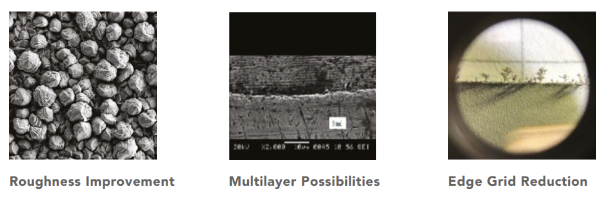
Advanced pulse and pulse reverse technology allows for precise control of coating formation at the microscopic level. By adjusting waveform, frequency, and current distribution, steel processors can directly influence grain structure, surface uniformity, and coating performance.
Compared to traditional DC processes, pulse-controlled power reduces irregular growth patterns and improves consistency across the entire strip. This results in higher-quality coatings that perform better in demanding applications.
Microscopic analysis clearly demonstrates the difference in coating structure, showing more controlled grain formation, reduced defects, and improved overall surface quality when pulse technology is applied.
Explore answers to the most commonly asked questions about our electroplating equipment and solutions. Get quick insights to make informed decisions.
DC power directly controls coating quality, efficiency, and consistency in electrolytic processes. Poor power quality leads to defects and higher operating costs.
They offer higher efficiency, lower ripple, faster control response, and greater flexibility compared to traditional thyristor systems.
Yes. ACRS rectifiers can reduce energy consumption and CO₂ emissions by up to 25–40% depending on the application.
ACRS systems are used in cleaning, galvanizing, tinning, chromating, and pickling lines.
Yes. Modular designs allow systems to scale with production needs and provide redundancy for higher uptime.